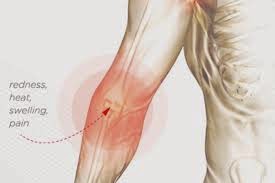
"Mirkin shook the sports medicine world on March 16, 2014, when he posted
an article on his website admitting that he’d been wrong all along,
particularly about the use of ice for treating injuries."
" Gary Reinl,
a lanky fellow never without running shoes and a ballcap atop his head
of wispy grey hair, assumes the role of this cold war’s General Patton.
Reinl’s book,
Iced! The Illusionary Treatment Option,
serves as the battle plan for the legions of sports medicine
practitioners who have banded together against the use of ice as a
recovery tool for athletes and Average Joes alike."
WHAT DOES ICE ACTUALLY DO:
" “One, ice delays recovery. Two, ice increases swelling. Three, ice
causes additional damage. Four, ice shuts off the signals that alert you
to harmful movement. And five, most importantly, it provides false
hope,” Reinl said. “You think you’re doing something good when you’re
actually doing the opposite.”"
WHY IS INFLAMMATION GOOD:
"The first step towards healing, inflammation is triggered when the body
senses a harmful event, specifically injured tissue. White blood cells
like neutrophils and macrophages, which Reinl dubs the “cleanup crew,”
rush to the injured site to sweep away debris and bring healing
nutrients. Damaged vessels constrict to quarantine the injury, while
surrounding vessels open up to let nutrient-rich fluid in, causing the
initial swelling."
WHY IS ICE BAD:
"
by applying ice to an inflamed area, you slow down the healing process,
Reinl warns. Much like a winter storm grinds highway traffic to a halt,
ice applies the brakes to the outflow of swelling and influx of healing
nutrients."
WHAT SHOULD WE DO TO HEAL:
"
Starrett and Reinl preach active recovery, using movement and light
exercise to speed healing. Practiced by track athletes for years in the
form of light jogging between sprint events, active recovery provides
low-level stress to tissue, allowing it to heal and grow stronger.
..... Active recovery is the answer and stillness is the enemy,” Reinl
said. He points out that swelling is removed from the site of injury via
the lymphatic system. Part of the circulatory system, the lymphatic
system is a sprawling map of one-way vessels that carry fluid toward the
heart, disposing of waste products that are eventually dispelled in
urine.
But there’s a catch to the lymphatic system — it’s completely
passive, meaning that it can only move waste when muscles squeeze lymph
vessels. No movement means no waste removal. In fact, when you freeze
lymphatic vessels, it creates a backflow that leaks fluid back into the
space between cells and increases swelling."
*****I can most definitely attest to and recommend active recovery after a knee replacement. Once I was released from the hospital and able to walk around at home, I was able to get around without crutches quite quickly (to my PT's dismay). As I have mentioned before, being in Crossfit shape and my insistence on using my knee, made me able to go back to work within 6 weeks.(generally it is recommended to go back to work within 3 months)
A PT is quoted as saying: " Dr. Chad Nowlin,
a physical therapist in Commerce, Texas, recalls that during one of
many internships,
knee replacement patients experienced excruciatingly
slow recoveries, even with the use of ice. But a switch to active
recovery changed everything."
To read the entire article please click
here
[Please click on one of these buttons to "like"on Facebook or, to rank this post on Google-thanks so much,it helps my blog rating.]

 PROTEIN | INGREDIENT SAFETY: